
3 posts tagged with "Military Logistics"

View All Tags

DLA Strategic Plan Building the Future of Defense Logistics
· 3 min read

DLA Strategic Plan

In today’s rapidly changing global landscape, logistics is more than just moving supplies — it’s a strategic advantage. The Defense Logistics Agency (DLA), the Department of Defense’s primary logistics combat support organization, has introduced its Strategic Plan 2025–2030, titled “DLA Transforms: A Call to Action.”

The new plan reflects a pivotal shift in how DLA approaches readiness, resilience, and collaboration in what it calls a “contested logistics environment.” It recognizes that future conflicts will test not just military strength, but the agility, precision, and innovation of logistics itself.

A Clear Mission and Forward-Looking Vision

DLA’s mission remains clear:

“Drive and sustain warfighter readiness by delivering unmatched global support as the Nation’s Logistics Combat Support Agency.”

Its vision looks to the future:

“Deliver agile, adaptive, and resilient logistics support across the continuum of conflict.”

This vision emphasizes readiness at every stage — from peace to crisis — powered by people, technology, and strong partnerships.

The Four Strategic Imperatives

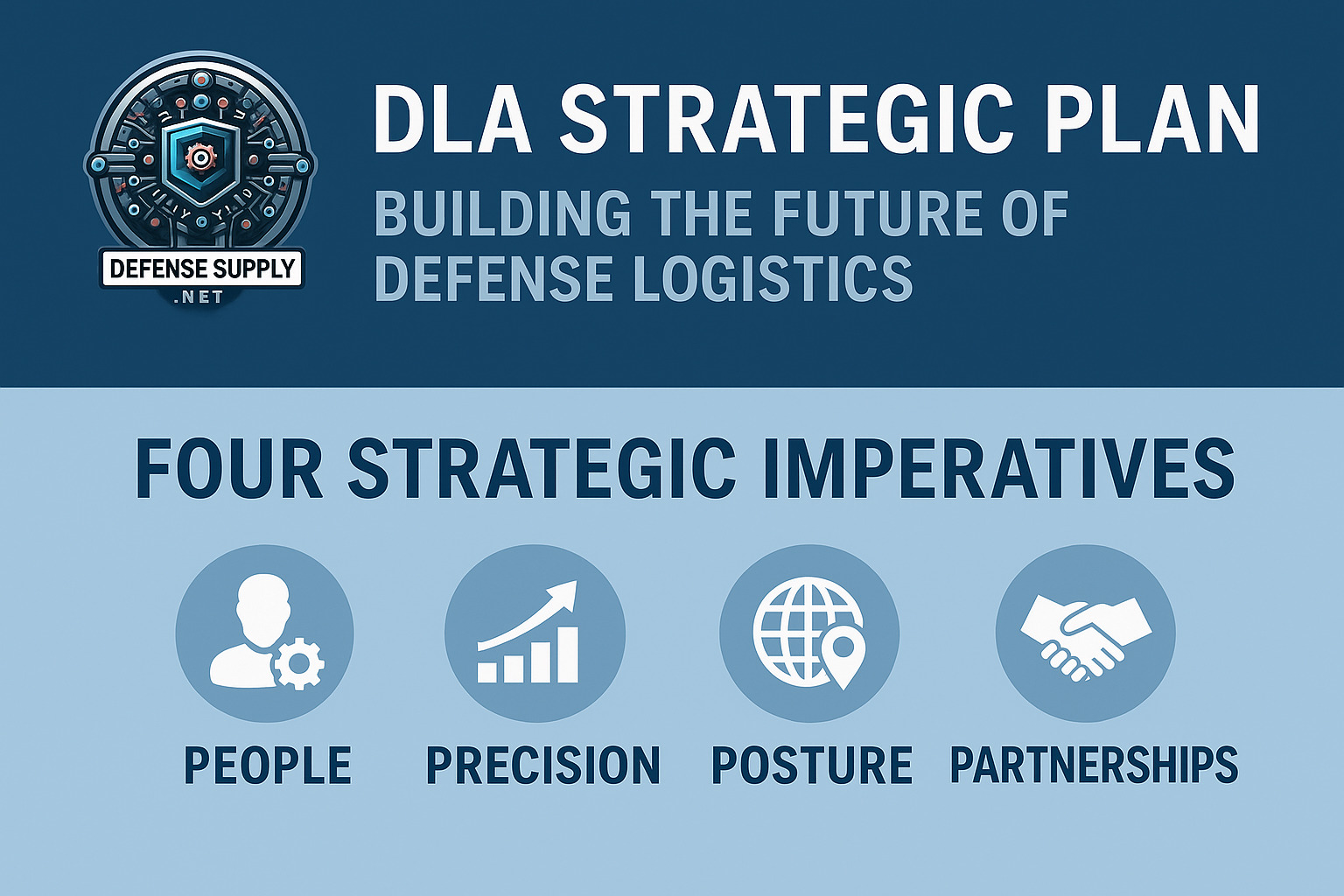
The DLA Strategic Plan 2025–2030 centers on four transformative imperatives: People, Precision, Posture, and Partnerships. Together, they form the foundation for the agency’s modernization and cultural transformation.
DLA Strategic Plan

1. People – Empowering an Agile Workforce

DLA’s success depends on its people. The plan focuses on attracting and retaining skilled talent, fostering continuous learning, and building a culture of adaptability. A data-literate, empowered workforce is seen as essential to executing the agency’s mission in a complex operational environment.

2. Precision – Enhancing Readiness Through Smart Logistics

Precision is about aligning logistics with real-time operational needs. DLA aims to leverage advanced analytics, automation, and AI to anticipate demand, improve forecasting, and strengthen performance. The goal is to deliver the right support, at the right time, with minimal waste and maximum accountability.

3. Posture – Strengthening Global Readiness

To ensure resilience in a contested world, DLA is enhancing its global logistics posture. This includes forward-positioning critical materials, improving command and control systems, and developing resource strategies that balance peacetime efficiency with wartime agility.

4. Partnerships – Expanding Collaboration Across the Enterprise

Modern logistics is a team effort. DLA is deepening partnerships with the military services, combatant commands, allies, industry, and other federal agencies. The aim is to create a more connected and interoperable logistics ecosystem — one that can adapt quickly and operate seamlessly across boundaries.

Digital Transformation and Data-Driven Decisions

A major enabler of this plan is DLA’s commitment to digital transformation. The agency is investing in integrated systems, modern data architecture, and advanced analytics to improve visibility and decision-making. By embedding data into every layer of logistics, DLA seeks to create a predictive and responsive supply network that supports the warfighter more effectively.

Challenges and the Path Forward

Transformation on this scale comes with challenges — from integrating legacy systems and managing resource constraints to driving cultural change. Yet DLA’s plan provides a clear framework for progress: measurable goals, leadership accountability, and a focus on agility. The agency’s success will depend on staying adaptable — learning from experience, leveraging partnerships, and using technology as a force multiplier for readiness.

Conclusion

The DLA Strategic Plan 2025–2030 marks a decisive step toward a more agile, data-driven, and resilient logistics enterprise. It’s not just about improving processes — it’s about reimagining how logistics supports national defense in an era defined by speed, complexity, and uncertainty. By empowering people, refining precision, strengthening posture, and deepening partnerships, DLA is positioning itself — and the broader defense community — to meet tomorrow’s challenges with confidence.

Smarter, Faster, Leaner: How Machine Learning is Reshaping Defense Logistics

· 5 min read

Defense Logistics AI

Military logistics is a high-stakes balancing act. Get it wrong, and critical supplies show up late—or not at all. Traditionally, planners have leaned on historical data and rigid forecasting models to keep supply chains moving. But with global operations becoming faster and more unpredictable, that playbook is starting to show its age. Enter machine learning.

Across the defense ecosystem, there's growing momentum around using machine learning (ML) to improve how materials are planned, sourced, and delivered. A recent internal initiative by the Defense Logistics Agency (DLA) even outlined a bold new approach to supply planning—one that swaps static spreadsheets for dynamic, data-driven forecasting.

But this shift isn't just theoretical. It's happening now—and it could transform how military suppliers operate in the next 3–5 years. Let’s explore what this shift looks like—and how it could affect everyone from federal planners to the businesses that serve them.

Why Traditional Planning No Longer Cuts It

For decades, military logistics planning has operated on a simple premise: if it worked last year, it’ll probably work this year too. Forecasts were based on static models—historical data, demand averages, and supply chain cycles that assumed a certain level of stability.

But modern defense operations are anything but stable. Supply chains today have to account for:

  • Volatile geopolitical situations
  • Complex multi-theater operations
  • Rapidly changing mission requirements
  • And a surge in the volume and variety of data being collected

What worked before now creates delays, overages, or worse—supply gaps that impact readiness. The challenge isn’t just having the right items in stock; it’s having them in the right place, at the right time, without overcommitting resources.

That’s where machine learning steps in.

How Machine Learning Can Flip the Script

Machine learning (ML) isn’t about replacing humans—it’s about giving them better tools. ML algorithms can analyze massive amounts of data from across the supply chain—inventory levels, usage trends, mission data, shipping times, vendor performance—and use that insight to make smarter predictions.

Here’s what that actually means in a logistics context:

  • Predictive planning: Instead of waiting for orders to come in, ML models can forecast future needs based on real-world variables—not just what happened last quarter.
  • Smarter sourcing: By learning which suppliers deliver consistently (and which don’t), the system can recommend better procurement strategies.
  • Real-time adjustments: When conditions change—say, a port shuts down or a component becomes scarce—the system can rapidly re-optimize plans on the fly.
  • Balanced decision-making: ML helps planners move beyond reactive, single-metric decisions (like cost or speed alone) to a more strategic mix of readiness, efficiency, and risk.

To read the full DLA white paper that sparked these insights, visit: 👉 Machine Learning Has Potential to Revolutionize Agency’s Planning Processes

Built-In Benefits—If the Data Is Right

Machine learning only works if the data feeding it is complete, consistent, and accessible. That’s why modernizing logistics isn’t just about software—it’s about breaking down silos. For ML to reach its potential, agencies must invest in:

  • Data sharing across functions and systems
  • Cloud-based infrastructure for scalability
  • Cybersecure pipelines that protect sensitive intel

When done right, this sets the stage for a logistics system that’s truly agile—and ready for whatever comes next.

The Human Side of Smarter Logistics

Technology is only half the battle. Even the most advanced machine learning system won’t make a difference if the organization behind it isn’t ready to change.

Successful adoption of ML in logistics planning requires:

  • Trust in the tech — decision-makers must understand and rely on machine-generated insights.
  • Training — personnel need to know how to interpret ML outputs and act on them confidently.
  • A shift in mindset — from reactive to predictive, from gut instinct to data-backed choices.

It’s a cultural pivot. But one that puts the entire supply chain in a stronger, more resilient position to support the warfighter in any scenario.

AI Isn’t Just for the DLA — It’s in Your Hands, Too

At DefenseSupply.net, we’re not just watching the AI wave—we’re riding it.

Our platform leverages Artificial Intelligence to help you search, sort, and stay ahead of DLA opportunities. Every day, our system scans the latest DLA solicitations and extracts key information—NSNs, part numbers, quantities, procurement history, and more—to give you the intel you need to win new contracts.

It’s like having your own digital analyst working around the clock to help you target the right opportunities faster and more effectively.

Whether you're a seasoned defense contractor or just starting out, we’re building the tools that give you an edge in a more competitive and data-driven marketplace.

Final Thoughts

The future of defense logistics is smarter, faster, and more adaptive—and machine learning is one of the key drivers making that future a reality. From streamlining planning to strengthening readiness, ML offers a real solution to the complexity of modern supply chains.

And while agencies like the DLA are laying the groundwork, businesses like yours can tap into the same tech-driven momentum today—with the right tools and the right insights.

Want to see how AI can give you an edge in defense contracting? 👉 Visit DefenseSupply.net and explore how we're making military procurement smarter, one RFQ at a time.

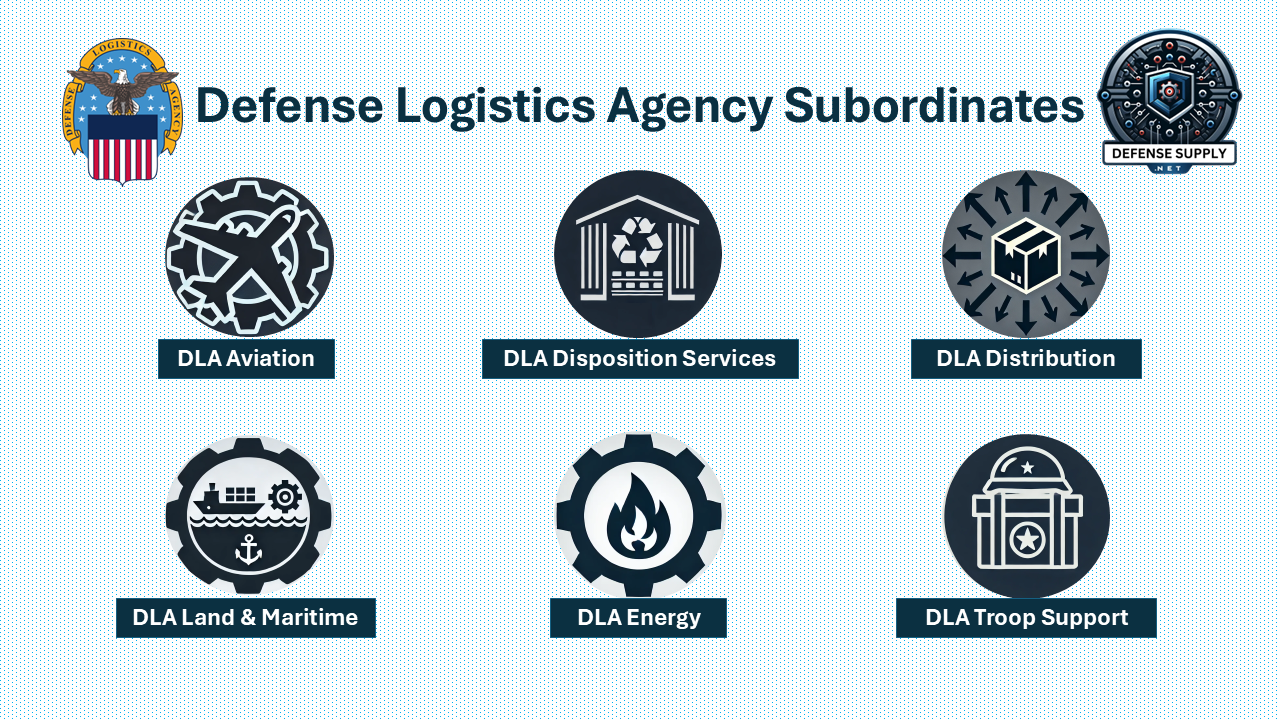
Breaking Down the Defense Logistics Agency- Major Subordinates and Regional Commands

· 12 min read

DLA

The Defense Logistics Agency (DLA) is a powerhouse in the world of military logistics and supply chains. The Agency employs nearly 25,000 workers across the globe, does $45 billion in revenue, and manages 5 million line items each year. That’s everything from jet fuel and medical supplies to parts for vehicles and, yes, even food rations. The agency operates at a scale comparable to small countries like Serbia or Bolivia.